
Can Communities Remain Competitive If Workers Can't Afford to Live There?

By Lynn A. Knight and Calandra Cruickshank (reprinted from LinkedIn)
From coast to coast, north to south, from rural to suburban communities outside major metros, the same question is emerging: how can communities remain economically competitive if workers can no longer afford to live there?
A recent news article used a new word to describe San Francisco's housing market: "hysteria." Fueled by both a longstanding housing shortage and a surge in AI-related jobs, competition for housing has become so intense that some newcomers are reportedly offering company stock options in exchange for housing opportunities.
While every community's housing challenges are unique, the consequences are remarkably similar. Housing is no longer simply a planning or social issue; it is increasingly an economic competitiveness issue. Housing shortages affect far more than families seeking homes. Employers struggle to recruit and retain workers. Essential workers are priced out of the communities they serve, while schools, hospitals, public safety agencies, and small businesses struggle to fill critical positions. Young adults delay household formation, and communities risk losing the workforce needed to sustain growth.
Data analysis at Realtor.com estimate the United States to be short more than 4 million housing units nationwide, the result of years of underbuilding relative to population and household growth. Approximately 47.6% of American renters are considered cost-burdened, spending over 30% of their income on rent, according to data compiled by StateBook International. Cost-burdened families have little disposable income and may be forced to move elsewhere to find a better quality of life.
Housing construction trends have varied considerably by housing type since 2020. The StateBook data below illustrates these changes.
Policymakers, employers, economic development organizations, and community leaders across the country are increasingly focused on housing affordability and supply.

Recent federal legislation reflects growing recognition that housing affordability and supply have become central economic challenges affecting workforce availability, community competitiveness, and long-term growth. Yet rising construction costs, regulatory barriers, labor shortages, and market dynamics continue to limit the production of housing at price points many workers can afford.
In disaster-impacted communities, housing shortages can move from chronic challenges to acute crises overnight. A wildfire, tornado, hurricane, or flood can eliminate years of housing supply in a matter of hours, making recovery more difficult for residents, employers, and local governments.
Following the 2023 Lahaina wildfire, Maui became one of the nation's most closely watched housing policy experiments. In response to severe housing shortages, Maui County approved legislation to phase out thousands of apartment-zoned short-term rental units over several years to return housing to residents. The debate highlights the difficult balance many communities face between supporting tourism and preserving housing opportunities for their workforce.
In the Florida Keys, tourism workers have commuted as much as two hours by bus to reach low-paying jobs because housing near employment centers is unavailable or unaffordable.
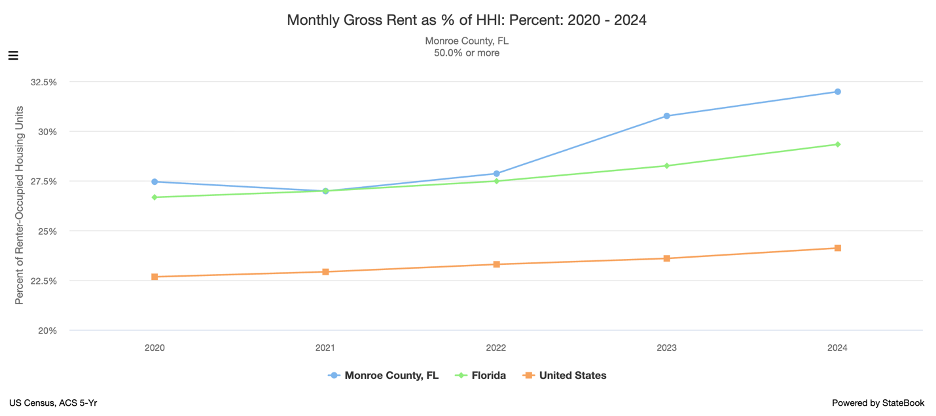
In New York's Mid-Hudson region, community leaders have frequently identified workforce housing as one of the area's most pressing economic development challenges. In some communities, households spend up to 50% of their income on housing, raising concerns about workforce attraction, retention, and future growth.

What are the solutions? Some promising practices are emerging:
Expanding Supply
· Accessory Dwelling Units (ADUs) are being built on the same lots as single family homes, providing an opportunity for multi-generational families to live together.
· Relaxing zoning requirements and providing density bonuses for development in targeted locations can help reduce development costs.
· Faster permitting - To keep up with demand in Paradise, California (following the Camp Fire), and Maui, the local governments outsourced permitting to a private company to reduce backlogs.
· Pre-approved housing designs - Design templates have started to become more common in disaster-impacted communities like Los Angeles, where more than 16,000 homes and other structures were destroyed in the 2025 wildfires.
Repurposing Existing Assets
· Adaptive re-use of surplus buildings including hotels, shopping centers, schools and commercial buildings to create rapid housing solutions is becoming more common. This is a particularly useful solution for downtown office buildings made vacant by remote work.
Managing Existing Housing Stock
· Reexamining vacation rental policies while balancing tourism and property rights - Policies affecting vacation rentals can help expand long-term housing supply, but they remain controversial because communities must balance workforce housing needs with property rights and tourism impacts.
Matching Housing to Workforce Needs
· Aligning housing development with local wages and workforce requirements - One consideration that is essential is to match new housing construction to the rents and mortgage rates workforce can afford. Workforce and housing studies can be conducted and the results used to develop updated comprehensive plans that align zoning and permitting to ensure success.
After Hurricane Michael in Florida, for example, some community leaders wanted to rebuild upscale. A workforce housing study we presented after the hurricane demonstrated, however, what affordability translated to in terms of a mortgage or rental – a far different market reality than what developers were proposing. In other words, to avoid losing their workforce, the communities urgently needed to match housing costs to average incomes.
Some communities are also exploring public-private partnerships in which employers and local governments collaborate to develop housing for critical employees on public land.
There is no single solution to America's housing challenges. Every community must determine the mix of policies, incentives, and investments that fit its circumstances. What is becoming increasingly clear, however, is that housing is no longer separate from economic development.
Communities that solve housing challenges will be better positioned to attract talent, support employers, retain residents, and remain competitive in the decades ahead.
Housing is not simply about where people live. It is increasingly about whether communities can compete, grow, and thrive.


Comments